


By Ghana Beacon Editorial Team
Published: May 4, 2026
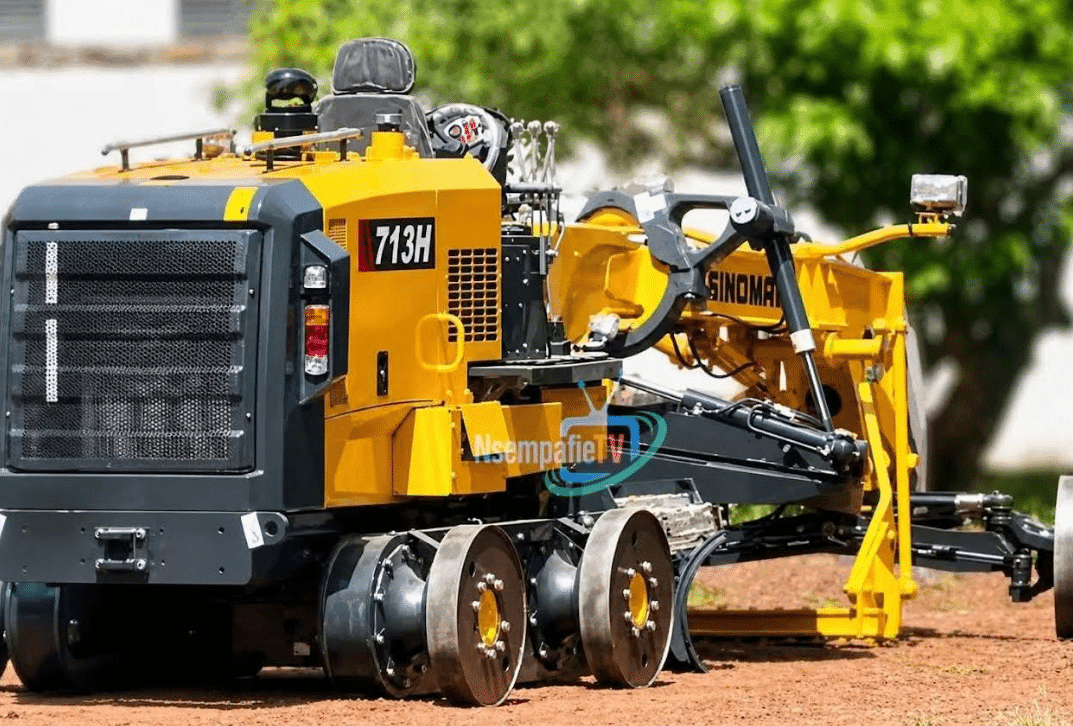
The Paramount Chief of the Dormaa Traditional Area, Osagyefo Oseadeeyo Agyeman Badu II, has received a fleet of heavy-duty road construction machinery intended to support regional infrastructure development.
The equipment, imported from China, is scheduled for deployment across the Dormaa Traditional Area and will also be used on key routes within the Bono and Ahafo regions. This initiative aims to address persistent transportation and infrastructure challenges affecting local trade and mobility.
Driving Local Economic Growth
The fleet consists of bulldozers, motor graders, rollers, and excavators. These machines will be used to construct and maintain feeder roads and main link routes.
During an inspection of the machinery at the Abanpredease Palace, Osagyefo Oseadeeyo Agyeman Badu II stated that the initiative is intended to address the daily challenges experienced by residents in the area.
“The transportation challenges confronting our farmers and traders in Dormaa, and the greater Bono and Ahafo areas, require urgent attention. Efficient roads are the arteries of our local economy,” the Dormaahene stated.
A Call for Civic Partnership
In addition to improving roads, the Dormaahene advocated for collaboration between traditional authorities, community leaders, and the central government in infrastructure development. He noted that while government holds primary responsibility, local leadership also plays a role in supporting development efforts.
“Government alone cannot shoulder the entire burden of national development,” he noted. “As community leaders, we have a duty to support government efforts. This is our contribution to ensuring that the vision of a built nation becomes a reality for every citizen, regardless of their location.”
Regional Impact
The Bono and Ahafo regions are important agricultural areas, contributing to Ghana’s cocoa and food crop output. Inadequate road infrastructure has contributed to post-harvest losses and higher costs of living.
The deployment of these machines is expected to:
- Reduce travel time between rural farming communities and urban market centers.
- Lower vehicle maintenance costs for commercial transport operators.
- Enhance emergency response capabilities by making remote areas more accessible.
This initiative follows previous efforts by Osagyefo Oseadeeyo Agyeman Badu II in education, healthcare, and environmental conservation. Local residents and transport unions have expressed support for the intervention, citing its potential to improve the local economy.


