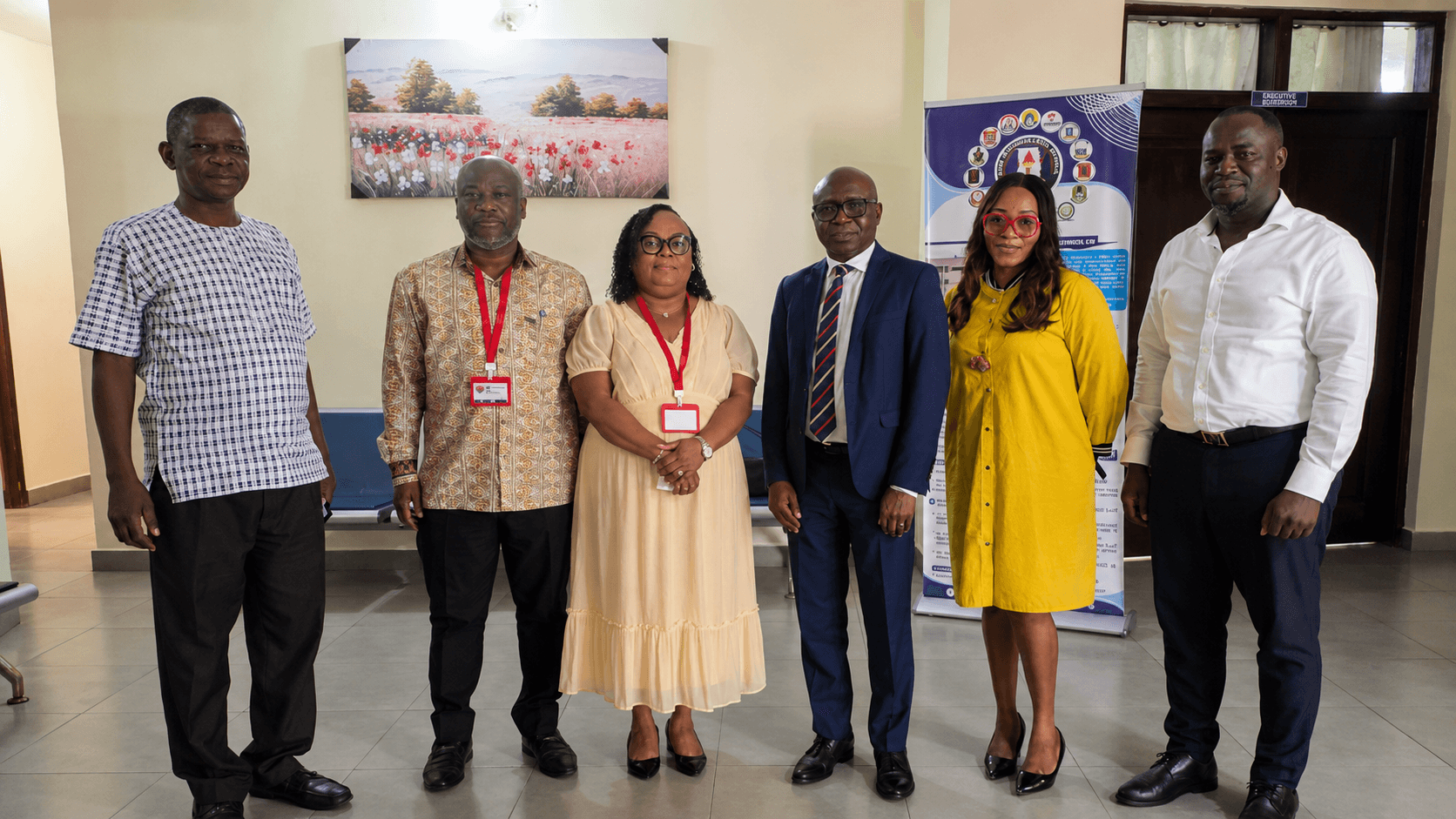
The Vice Chancellors’ Ghana (VCG) beginning talks with the State Housing Corporation Limited (SHC) about the possibility of form to address order to deal with the student and staff accommodation problems existing at Ghana’s public universities. As part of its efforts to explore practical solutions to the infrastructure problems within the country’s higher education sector, the VCG delegation—headed by Prof. Elvis Asare-Bediako, who is both its Chairman and Vice-Chancellor of the University of Energy and Natural Resources (UENR)—paid a visit of courtesy on the leadership of SHC. The talks were concerned with the ways in which the two organizations could work together to create accommodation that was affordable, accessible and sustainable for the students and staff of public universities. The Executive Secretary of the VCG, Dr. Cynthia Sena Kpeglo-Frieku, was also part of the delegation, together with Hardi Imoro Adam, Senior Assistant Registrar in charge of Secretariat Operations, and Fidelis Abaare, Senior Accountant in the VCG Secretariat.
Growing Demand for University Accommodation
The engagement occurs in the light of the rising demand for residential facilities at Ghana’s public universities, since the increasing number of students is still putting pressure on the current accommodation infrastructure. Prof. Asare-Bediako highlighted the importance of student welfare when speaking on the future development of higher education. He pointed out that having access to safe, affordable, decent and conveniently situated accommodation is an important element of the university experience and can help in creating an environment which is conducive to teaching and learning.
He says that VCG is looking into the way the expertise and resources of the State Housing Corporation could be used to help universities expand their residential infrastructure. The talks looked at possible areas of collaboration such as the design, building, management, leasing and maintenance of student hostels and staff accommodation. This kind of arrangement would allow universities to increase their residential capacity at the same time as decreasing the strain on their present facilities.
VCG Eyes Strategic Housing Partnership
The engagement also looked into the possibility of providing purpose-built student accommodation and staff housing, drawing on SHC’s experience in property development and construction. Property management was also seen as a possible field of cooperation, especially concerning the long-term operation and maintenance of residential facilities which had been developed under any future partnership. The discussions are still only exploratory and have not led to any final agreement or to the announcement of a particular housing project as part of the engagement. The Vice Chancellors of Ghana have said that they are still committed to working with government institutions, the private sector, development partners and all other stakeholders in order to find sustainable solutions to the problems facing public universities. An association with SHC might be included within the wider initiative aimed at improving the accommodation facilities and at offering students and staff safer and more accessible housing.
About State Housing Corporation
The State Housing Corporation has its origins in the Gold Coast Housing Corporation, which was set up in 1956 by the Gold Coast Housing Corporation Ordinance of 1955. In 1965 it was known as the State Housing Corporation and its aim was to increase the availability of housing in Ghana. In 1995 the corporation became a limited liability company by means of the Statutory Corporations (Conversion to Companies) Act of 1993, thus moving towards commercial operations. The company offers a range of services such as property development, design and construction, the development of residential estates, property management, leasing and sub-leasing, and also assists with mortgage arrangements. If the talks between SHC and the Vice-Chancellors of Ghana move on to formal agreements, the areas in which they have specialist knowledge could form the foundation for future cooperation with the public universities.
Source: Institutional Advancement and Alumni Relations Office (IAARO), University of Energy and Natural Resources (UENR), Sunyani.
By Bismark Ferkah | August 30, 2026