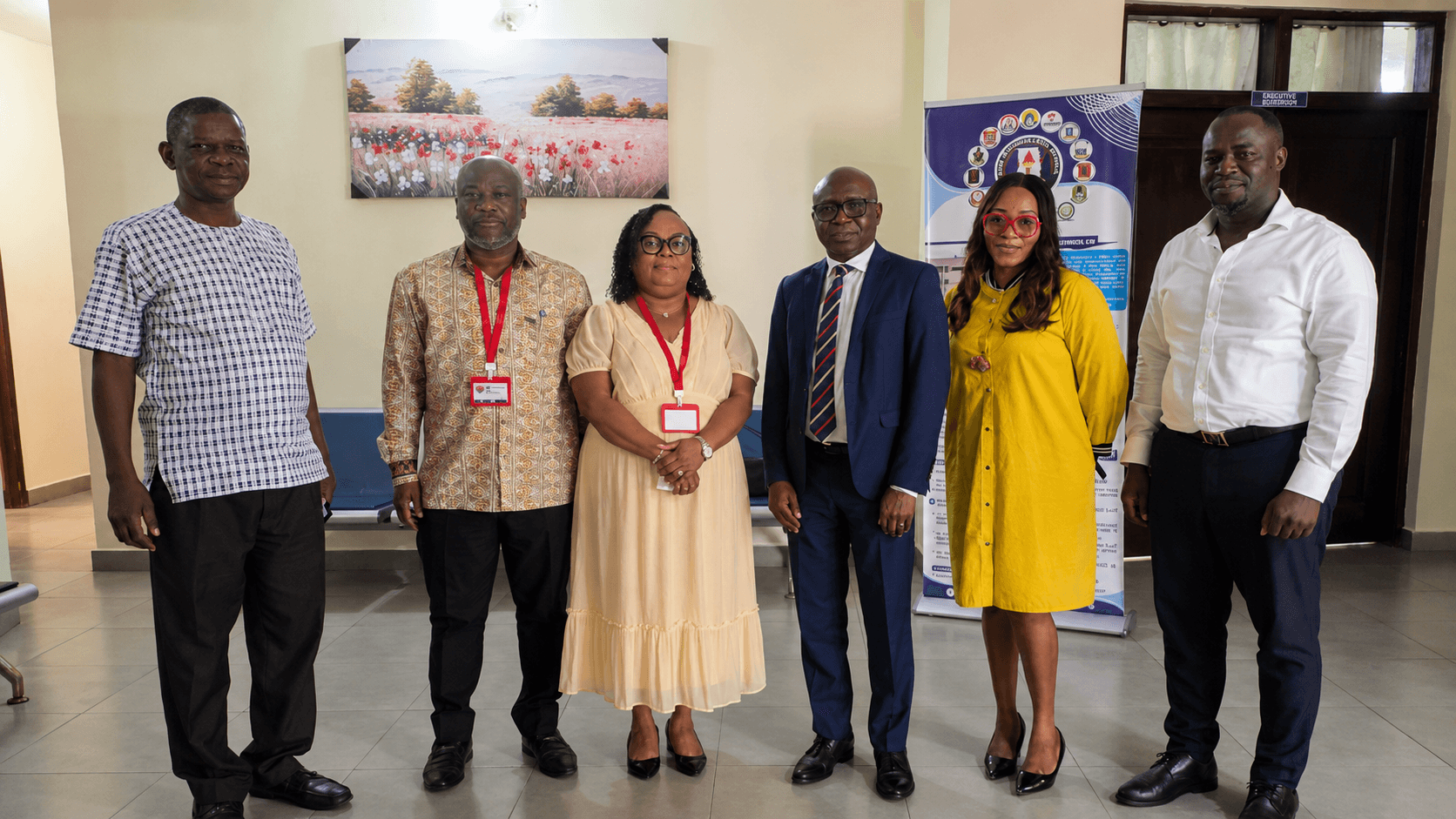
The Centre for Grants and Research Innovation (CeGRI) at the University of Energy and Natural Resources (UENR) has implemented initiatives to enhance the University’s research ecosystem, with a focus on research governance, grants management, researcher development, innovation, and research ethics. Since its establishment in 2021, the Centre has supported the development of institutional policies, governance structures, funding mechanisms and capacity-building programmes aimed at creating an enabling environment for researchers to conduct high-quality research, compete for grants and translate research outcomes into innovation and institutional impact. These initiatives contribute to UENR’s broader strategy to establish research and innovation as central elements of academic excellence, institutional growth, and sustainable development in Ghana and internationally.
Development of a Robust Research Support System
CeGRI aims to serve as an effective research support office, responsible for planning, coordinating, and managing research activities to facilitate institutional development. The Centre’s mission is to promote research at UENR by offering technical, administrative, and financial management support to improve the quality and impact of research and innovation.
CeGRI is guided by three core values: academic excellence, innovation, and engagement. The Centre’s primary areas of operation include research strategy and development, grants management, research performance, intellectual property, technology transfer and commercialization, and research ethics. Through these operational areas, CeGRI supports researchers and academic units by developing systems for effective planning, implementation, monitoring, and management of research activities across the University. The Centre is led by Prof. Richard Kwasi Bannor, with Dr. John Kwasi Annan as Centre Registrar. The administrative team includes Bright Adarkwah, Principal Administrative Assistant, and Paul Abizi, National Service Personnel.
Institutional Foundations and Subsequent Growth
The establishment of CeGRI in 2021 represented a significant advancement in UENR’s efforts to institutionalize research support, coordination, and innovation. At its inception, Dr. Peter Sanful (Foundation Head of CeGRI), Rev. Kwaku Karikari Amoah (Foundation Registrar), and Bright Adarkwah (then Senior Administrative Assistant) were appointed by the Governing Council and Management to establish the institutional foundation for the Centre. The founding team established the systems, structures, and administrative mechanisms necessary for CeGRI to function as a dedicated centre for research, grants, and innovation. These foundational efforts have facilitated the development of broader research governance, grant management, and researcher support initiatives throughout the University.
Strategic Research Development Planning
A significant milestone in UENR’s research development was the formulation and adoption of the Strategic Research Development Plan (SRDP) and the Research Development Framework in 2021. This initiative established a structured approach for developing research policies, governance systems, administrative structures, and coordination mechanisms across UENR. The SRDP aims to promote systematic, coordinated, and efficient research activities through both bottom-up and top-down participatory approaches. Within this framework, researchers, departments, schools, and central University structures are provided with mechanisms to participate in shaping and implementing UENR’s research agenda.
Enhancement of Research Governance Structures
As part of SRDP implementation, UENR has established research governance structures at multiple levels within the University. At the University-wide level, the Central Consultative Research Committee offers strategic direction, while School Consultative Research Committees provide oversight at the school level. School Research Officers facilitate research activities at the operational level, while Department Research and Grants Committees, supported by Department Research Officers, provide oversight at the departmental level. Collectively, these structures establish a coordinated framework for managing research priorities, funding opportunities, research administration, and performance across UENR. The governance system is further supported by the development and implementation of institutional instruments such as the Research Policy, University Research Agenda, Guidelines for Project Administration, and Ethics Policy. These instruments offer guidance for the conduct and administration of research, reinforcing the University’s commitment to research quality, integrity, and responsible practices.
Enhancing Researchers’ Capacity for Grant Acquisition
Researcher development constitutes a key component of CeGRI’s mandate. The Centre has implemented the Coaching and Mentoring Programme (CAMP) to enhance researchers’ grantsmanship skills and increase their capacity to prepare competitive research proposals. CeGRI has established the Internal Grant Funding Programme (GFP) to support research activities and provide internal research grants. Additional initiatives, such as the University Research Fund and Research Support Levy, are designed to strengthen UENR’s capacity to finance and sustain research-related activities. The Centre has registered UENR on multiple grant platforms to broaden researchers’ access to funding opportunities and support the preparation and submission of competitive applications.
Institutional Progress Achieved by CeGRI
Since its establishment, CeGRI has supported various initiatives intended to strengthen UENR’s research infrastructure. Key developments include the Research Policy, University Research Agenda, Guidelines for Project Administration, and Ethics Policy. The Centre has also facilitated the implementation of CAMP, the establishment of the Internal Grant Funding Programme, the Research Support Levy, and the University Research Fund, in addition to registering UENR on grant platforms. The University’s subscription to the Times Higher Education (THE) World University Rankings enables UENR to participate in international higher education benchmarking and visibility initiatives. Collectively, these interventions contribute to the institutional infrastructure that supports research planning, funding, governance, capacity development, and international visibility.
Research and Innovation as Catalysts for UENR’s Development
In addition to administrative and technical support, CeGRI contributes to initiatives aimed at enhancing the visibility and performance of research conducted at UENR. CeGRI’s activities in research planning, grants management, performance monitoring, innovation, technology transfer, and research ethics strengthen the institutional systems that support researchers. As UENR expands its contributions to energy, natural resources, science, technology, and sustainable development, CeGRI is anticipated to remain integral to the University’s efforts to establish the structures, resources, and opportunities necessary for advancing research and innovation.
By Bismark Ferkah
September 24, 2026
Source & Attribution:
This article was prepared by Ghana Beacon from information provided in a University of Energy and Natural Resources (UENR) institutional release authored by James Clarke Hayford of the Institutional Advancement and Alumni Relations Office, UENR, with institutional contributions from Prof. Richard Kwasi Bannor, Head of the Centre for Grants and Research Innovation (CeGRI), and Dr. John Kwasi Annan, Registrar of CeGRI.