


Michael Abisa
Leader in AI & ML | Doctorate in Analytics
May 9, 2026
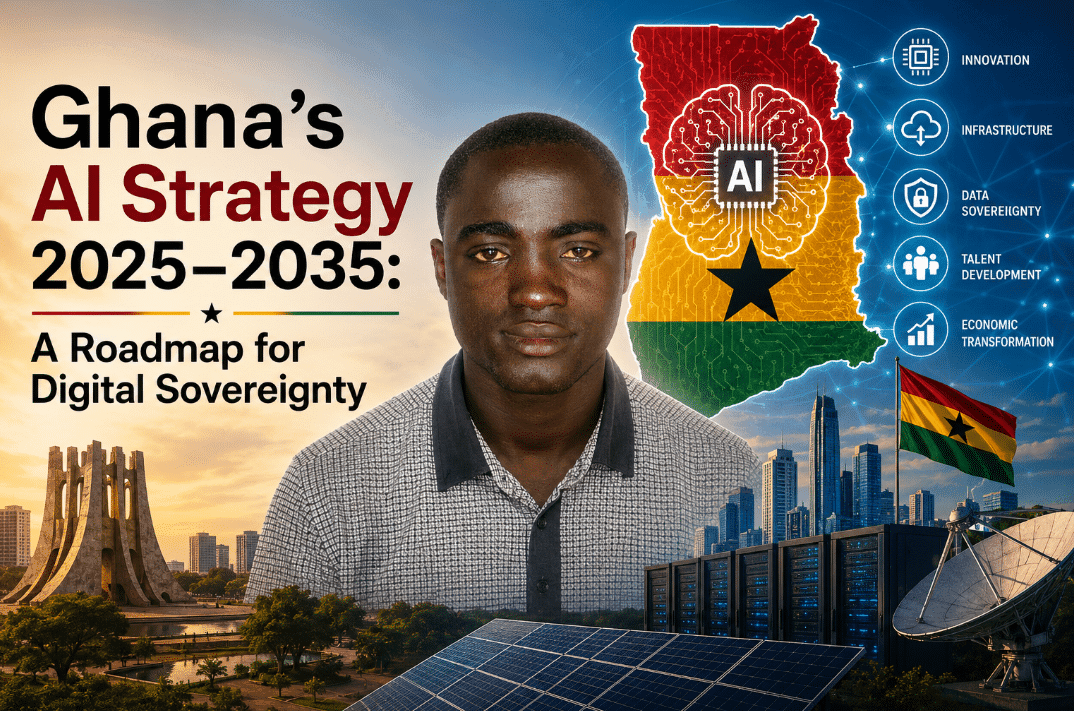
Historically, African nations have primarily adopted digital technologies developed in external markets such as Silicon Valley and Beijing. The introduction of the Ghana National Artificial Intelligence Strategy (2025–2035) marks a shift toward local development and control of digital infrastructure and policy.
In 2026, the strategy has evolved from a policy document to a central framework guiding Ghana’s digital development. Digital sovereignty, in this context, refers to the nation’s ability to control its digital infrastructure, data, and technological direction.
Core Components of the Strategy
The strategy is structured around eight core pillars, each intended to align artificial intelligence development with national priorities and the interests of Ghanaian citizens. These pillars can be summarized as follows:
- Data Sovereignty. This mandates that sensitive national data, including health records, financial transactions, and agricultural information, is stored on local servers such as those established in Accra AI Tech City. The objective is to maintain national control over data and prevent unauthorized access by external entities.
- Local Language Models (LLMs). The strategy allocates resources to develop AI systems capable of understanding and processing Ghanaian languages such as Twi, Ga, Ewe, and Dagbani. This approach addresses the limitations of standard AI models in capturing local linguistic and cultural nuances, thereby improving accessibility to digital services.
- Ethical Governance. The establishment of the Responsible AI Authority (RAIA) provides oversight to prevent algorithmic bias in AI applications, including those used in banking and employment. The aim is to ensure equitable treatment for all citizens in AI-driven decision-making processes.
Why We Can’t Just “Import” AI
A common question in the field is why existing AI tools, such as ChatGPT, are not simply adopted. The primary reason is the importance of contextual relevance.
AI systems trained predominantly on Western datasets may not account for local factors, such as the harmattan season in agriculture or the prevalence of tropical diseases in healthcare. Developing a national AI framework ensures that technological solutions are tailored to Ghana’s specific conditions and needs.
Expert Perspective: The Role of Human Capital
The success of the 2025–2035 strategy depends on the development of human capital, particularly in fostering AI literacy across the population. Achieving digital sovereignty requires a workforce and citizenry equipped to engage with and manage emerging technologies.
Digital sovereignty is defined by national ownership and control over technological tools, data, and the direction of digital development.
About the Author
Dr. Michael Abisa specializes in Data Science and AI Management. This 10-day series in the Ghana Beacon provides information to help Ghanaians understand and adapt to technological advancements.
Coming Tomorrow:
Day 6: Data Privacy in the Age of Intelligence—Protecting Your “Digital Cocoa.”
Discussion Point:
Which of the Core Components of the Strategy do you think is most important for Ghana’s development? Let us know in the comments!


May the Lord bless your hard work to enlight us more. Dr. Michael Abisa
About time Ghana controls it own data and AI direction.Dr. Michael Abisa lead us.