


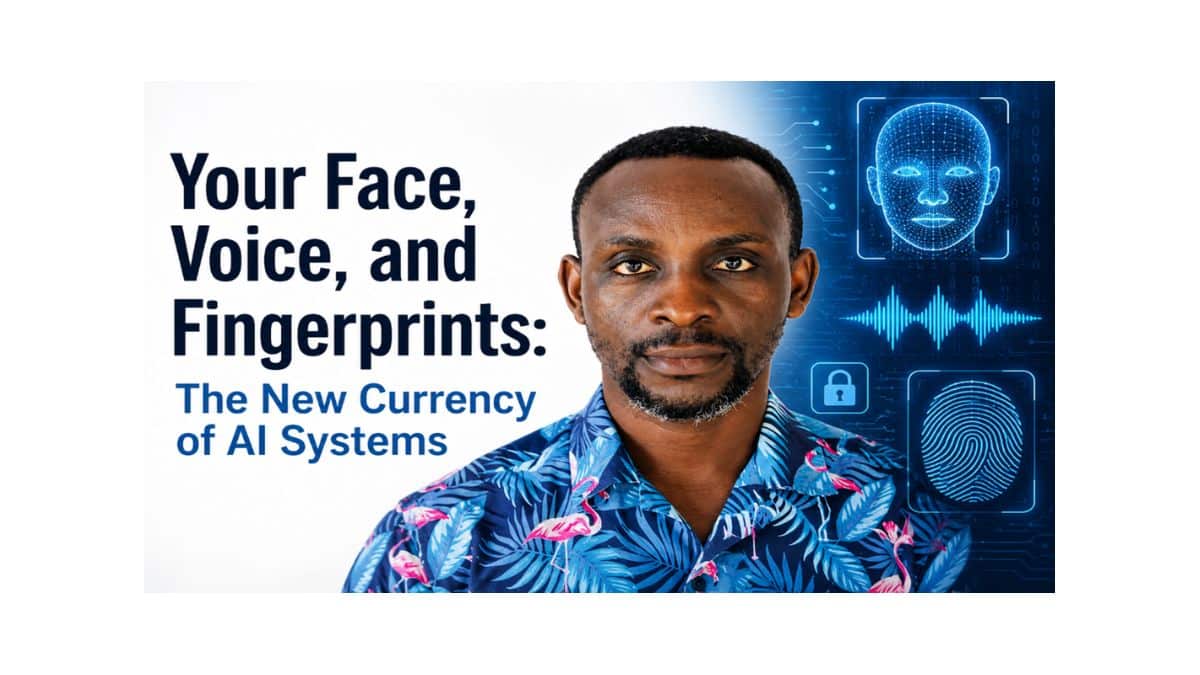
In Ghana and other African countries, the use of artificial intelligence has led to increased collection, storage, and analysis of biometric data such as facial images, fingerprints, and voice recordings. These developments are shaping how personal identity is managed in digital systems.
Biometric technologies are now integrated into SIM card registration, mobile banking authentication, facial recognition systems, and AI-driven customer service platforms. These systems offer potential benefits such as convenience, enhanced security, and broader financial inclusion. However, privacy specialists have identified risks associated with the rapid expansion of biometric data collection, including concerns about data security and surveillance.
Understanding Biometric Data
Biometric data refers to unique physical or behavioral characteristics used to identify individuals. Common forms include:
- Fingerprints
- Facial recognition scans
- Voice patterns
- Eye scans
- Digital signatures
Biometric traits differ from passwords in that they are permanent and cannot be reset or replaced if compromised.
“Your biometric identity stays with you for life,” cybersecurity analysts frequently caution.
How AI Systems Use Biometric Information
Artificial intelligence systems are especially effective at analyzing large volumes of biometric information. AI algorithms can:
- Match faces in photos and videos.
- Recognize voices during phone calls.
- Detect suspicious behavioral patterns.
- Verify identities during digital transactions.
In Ghana, biometric and AI technologies are now integrated into widely used services such as fintech applications, mobile money platforms, telecommunications systems, and national identity verification processes.
Ghana’s Expanding Digital Identity Infrastructure
Recent digital transformation initiatives in Ghana, including the introduction of the Ghana Card, biometric SIM registration, and the expansion of digital financial systems, have contributed to the increased use of AI-enabled identification technologies across the country.
Supporters argue that these systems:
- Improve national security
- Reduce fraud
- Expand financial inclusion
- Strengthen digital governance
Privacy advocates have called for stronger safeguards to address potential misuse, unauthorized access, and increased surveillance associated with biometric data systems.
Facial Recognition and Surveillance Concerns
Facial recognition technology is a subject of ongoing debate in the context of AI development worldwide.
AI-powered cameras are capable of identifying individuals in real time by analyzing facial features. Without appropriate oversight, these systems may present risks such as:
- Enable mass surveillance
- Violate civil liberties
- Misidentify innocent individuals
- It disproportionately affects vulnerable populations.
Studies have indicated that certain facial recognition systems exhibit higher error rates for individuals with darker skin tones. This has raised concerns about algorithmic bias, particularly in African contexts.
Voice Data and AI-Powered Fraud
Voice technology is increasingly used in smartphone applications, banking systems, and AI assistants, which collect and analyze voice recordings.
This data can reveal:
- Emotional states
- Accent and language patterns
- Personal preferences
- Behavioral characteristics
Cybersecurity experts have noted that AI-generated voice cloning techniques are becoming more sophisticated. These methods can replicate voices using limited audio samples, which may allow unauthorized access to voice authentication systems or facilitate impersonation during financial transactions.
Mobile Banking and Biometric Authentication
Banks and fintech platforms across Ghana increasingly rely on biometric verification systems to secure transactions.
Consumers commonly use:
- Fingerprint logins
- Facial authentication
- Voice verification systems
Although these tools offer increased convenience and security, they also centralize sensitive personal information in digital systems, which may be vulnerable to cyberattacks and data breaches.
The Problem of “Invisible Consent”
A key challenge in biometric privacy is ensuring that users provide informed consent.
Many users:
- Do not fully understand how their biometric data is used.
- Cannot easily opt out of collection systems
- Are unaware of how long their information is stored
- Do not know whether third parties can access their data.
Privacy experts recommend that consent mechanisms be transparent, straightforward, and accessible, rather than embedded in lengthy legal agreements that are rarely read by consumers.
Why Biometric Breaches Are More Dangerous
Traditional passwords can be changed following a security breach, but biometric information cannot be altered in the same way.
If biometric data such as fingerprints, facial scans, or voiceprints is stolen or leaked, the consequences may be long-lasting. Potential risks include:
- Identity theft
- Financial fraud
- Unauthorized surveillance
- Long-term privacy violations
For these reasons, experts increasingly classify biometric data as among the most sensitive types of personal information in the digital economy.
Regulatory Challenges in Ghana
Ghana’s Data Protection Act, 2012 (Act 843), establishes general protections for personal data. However, the development of AI-driven biometric systems is advancing more rapidly than many existing regulatory frameworks.
Key policy questions now emerging include:
- Who owns biometric data?
- How long should companies store it?
- Can consumers request deletion?
- How should AI surveillance systems be regulated?
Technology policy analysts have suggested that Ghana may require AI-specific legislation to address the increasing complexity of biometric data governance.
According to the article source, the Ministry of Communications and Digitalization announced plans in 2026 for a new Data Protection Bill focused specifically on AI and automated decision-making systems.
Balancing Innovation and Privacy
Experts acknowledge that, when responsibly managed, AI-powered biometric systems can offer significant societal benefits.
Potential advantages include:
- Improved fraud detection
- Expanded access to financial services
- Faster digital transactions
- Enhanced public service delivery
Policymakers, businesses, and regulators face the challenge of balancing technological innovation with ethical safeguards and consumer protection.
Protecting Yourself in the AI Era
Privacy specialists recommend several practical steps for consumers:
- Regularly review app permissions for cameras, microphones, and biometric sensors.
- Be cautious of suspicious voice calls or voice notes requesting money.
- Ask service providers how biometric data is encrypted and stored.
- Avoid sharing sensitive biometric information unnecessarily.
As artificial intelligence becomes more integrated into daily life, biometric identity is likely to become an increasingly valuable asset for individuals.
In the digital era, biometric identifiers such as face, voice, and fingerprints are now considered data assets that are increasingly collected and analyzed by AI systems. For Ghana and other African countries, a key issue is whether adequate safeguards are in place to ensure responsible protection of this data.
About the Author
Dr. Michael Abisa is an expert and leader in Data Science and AI Management. This 10-Week series in the Ghana Beacon aims to equip Ghanaians with the knowledge needed to navigate a technology-driven future.
Coming Next Week:
Can AI Discriminate Against Consumers? The Hidden Danger of Algorithms


